

Jannine MacKinnon
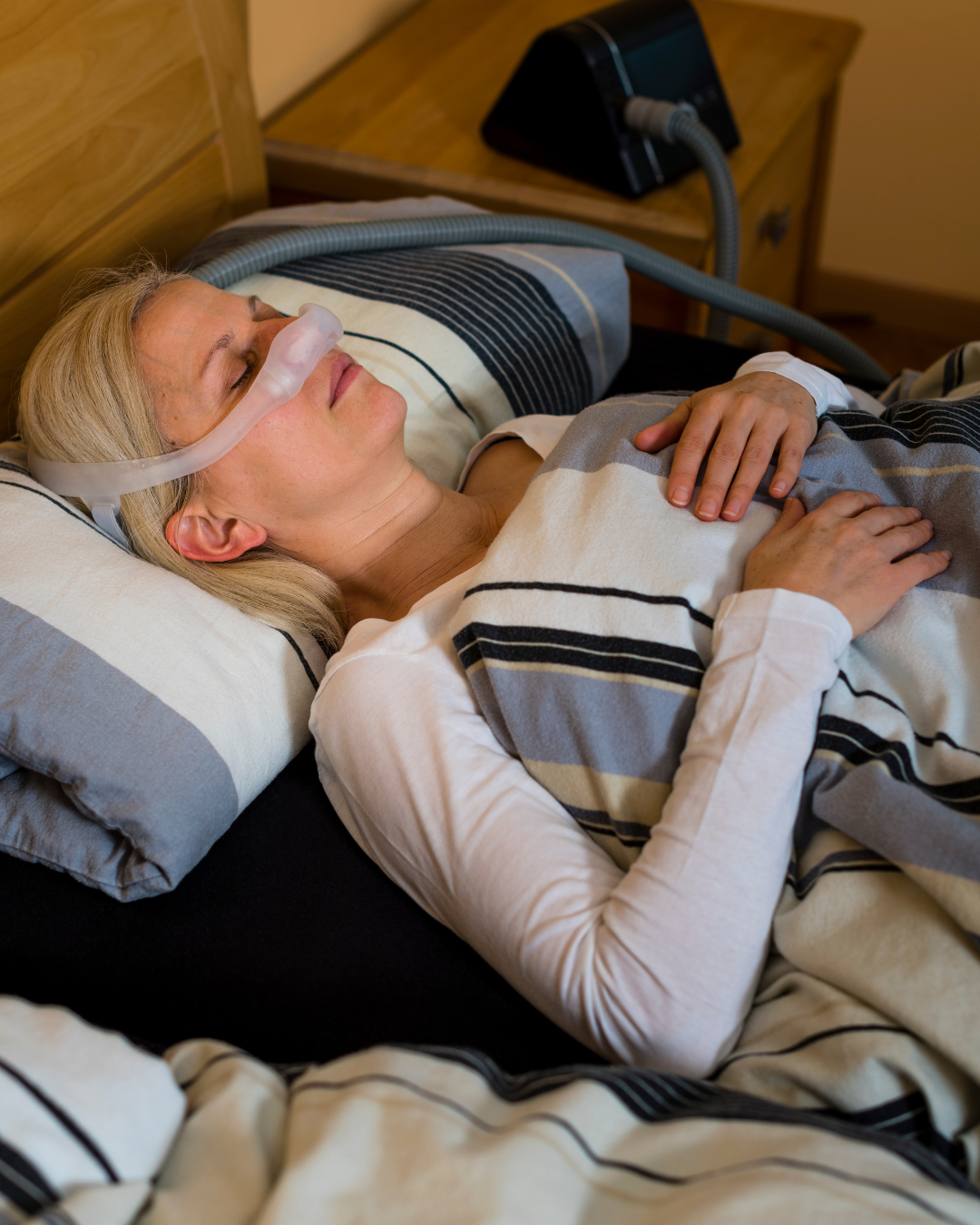
Chronic over-breathing lowers CO₂ and can destabilize nighttime breathing. Learn how dysfunctional breathing patterns affect sleep and what you can do.
Most people assume breathing is something the body handles effortlessly, day and night. But when breathing patterns become dysfunctional during the day, especially in the form of chronic over-breathing (hyperventilation), the effects don’t stop when you fall asleep. In fact, they can quietly disrupt your breathing all night long.
What Happens When You Over-Breathe?
Chronic over-breathing lowers carbon dioxide (CO₂) levels in the blood, a condition known as hypocapnia. While oxygen often gets the spotlight, CO₂ plays a critical role in regulating breathing.
Your brainstem uses CO₂, not oxygen, as the primary signal to breathe. When CO₂ drops too low, this signaling system becomes unstable.
Why CO₂ Matters More at Night
During wakefulness, breathing is influenced by both:
- Conscious control (you can change your breathing)
- Chemical control (CO₂ levels)
During sleep, however, breathing becomes almost entirely automatic and chemically driven.
That means if your baseline CO₂ is chronically low from daytime over-breathing, your nighttime breathing control system is already at a disadvantage.
The “Apnea Threshold” Problem
There’s a critical concept in sleep physiology called the apnea threshold.
If CO₂ levels fall below this threshold:
- The brain temporarily stops sending signals to breathe
- A pause in breathing (apnea) occurs
People who chronically over-breathe tend to sit closer to this threshold. As a result, even small fluctuations in CO₂ during sleep can trigger:
- Brief breathing pauses
- Irregular breathing rhythms
- Cycles of over-breathing followed by under-breathing
This pattern is sometimes referred to as unstable or periodic breathing.
Connection to Central Sleep Apnea
Unlike obstructive sleep apnea (which involves airway collapse), central sleep apnea (CSA) is a control problem.
Low CO₂ levels can suppress the brain’s respiratory drive, increasing the likelihood of:
- Central apneas (no breathing effort)
- Fluctuating breathing patterns during sleep
This is especially relevant in people who:
- Habitually over-breathe
- Have high stress or anxiety levels
- Are sensitive to changes in CO₂
Sleep Fragmentation and Symptoms
Even subtle breathing instability can disrupt sleep architecture. Common effects include:
- Frequent micro-awakenings
- Light, non-restorative sleep
- Sudden waking with a gasp or “air hunger”
- Morning fatigue despite adequate sleep duration
These symptoms often go unexplained because standard sleep tests may not always capture mild instability.
The Role of Mouth Breathing
Daytime dysfunctional breathing often carries into the night in the form of mouth breathing, which can:
- Encourage faster, deeper breathing
- Increase CO₂ loss
- Dry and irritate airways
- Worsen overall breathing efficiency
This creates a feedback loop: poor breathing → poor sleep → worsened breathing patterns.
Long-Term Adaptation: A Reset Breathing Set Point
Over time, chronic hyperventilation can lead to a reduced tolerance for CO₂. This means the body becomes “used to” lower levels, making breathing:
- More sensitive
- More reactive
- Less stable
This altered set point affects both daytime and nighttime breathing regulation.
Putting It All Together
When someone chronically over-breathes during the day, nighttime breathing may become:
- Irregular rather than steady
- Prone to pauses (apneas)
- Driven by an overly sensitive control system
Instead of deep, restorative breathing during sleep, the system becomes unstable—often without the person realizing why they feel unrefreshed.
Address the Root Pattern (Not Just Symptoms)
If you experience:
- Frequent gasping at night
- Significant daytime fatigue
- Loud snoring or observed apneas
If this is chronic, consider:
- Breathing retraining approaches
- Working with a clinician trained in dysfunctional breathing
- Screening for sleep apnea or other sleep-disordered breathing
Breathing is automatic—but not always optimal.
When we restore it during the day, we often restore it at night too.
Complete the Breathing Assesment to see where your breathing stands and how we can help.